A Thanksgiving reflection on ‘The House That Turkey Built’
Canadian, a cattle and railroad town, boasted a population of 2,000 on Nov. 26, 1902, when the Women’s Christian Temperance Union was first established here.
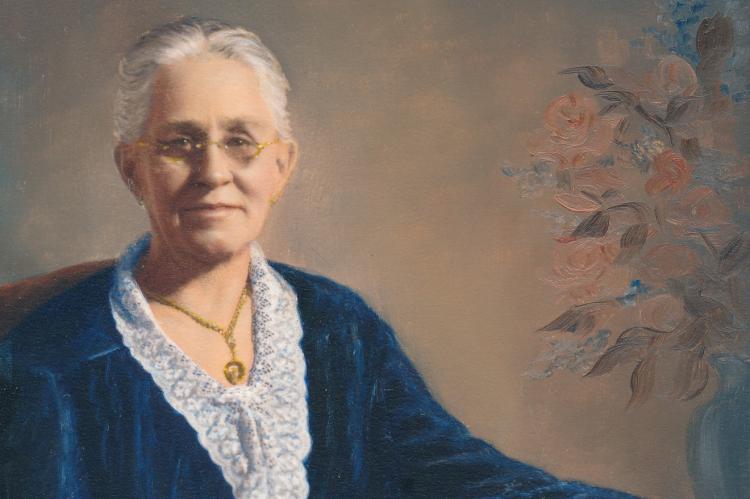
Mrs. J.F. Johnson was the first president of the organization that met every fourth Wednesday afternoon, and she served in that capacity her entire life. She was assisted by Mrs. J.T. Jackson, the recording secretary; Mrs. Ed Carson, the correspondence secretary; and 24 charter members.
The WCTU was formed with one clear mission. The handwritten history of this Union begins with a statement of purpose: “In 1902, it became necessary that something be done to regulate the many saloons then operating in our town.”
When you consider that men of the era consumed three times the amount of hard liquor as today, you can appreciate their concern.
At the turn of the century, Canadian had 13 saloons and no churches. As families moved into the growing town, WCTU membership increased and the time was right to push for a local option election. This election gave residents the choice of whether to allow liquor in the city.
It would be another 17 years before the 19th Amendment was ratified, and women were given the right to vote, so only the men would decide.
On voting day, Dec. 30, 1903, the women of the Christian Temperance Union held an early prayer service at the Presbyterian Church, and then marched with a band and school children down Main Street, singing “Saloons Must Go.” They prevailed, too, with 64 votes cast supporting the ban and 34 against.
The ladies of the WCTU not only regulated the saloon owners—they shut them down. Two years later, the “wets,” as the members called them, proposed another local option. They lost. A third attempt ended in the same result.
In 1903, the first library facilities serving Canadian residents were located in the Stockman’s Mercantile Co., where rental books were available. That same year, the WCTU provided a small reading room in the rear of The First National Bank.
With the liquor sales ban no longer their primary mission, the ladies sought a permanent home for their organization where they could provide meeting facilities and open a library.
The lots where the building now stands were offered for sale at $400, an almost impossible sum for a group of women with no money. At first, they collected donations among the membership, and raised $65.20. According to the minutes, Mrs. H.E. Hoover and Mrs. W.C. Isaacs were appointed to solicit donations from the men of the town. They raised an additional $300.
By August 1905, the persistent women of the WCTU had raised the remainder of the money and lots on the corner of Main and Fifth streets were purchased.
The first fundraising bazaar was held in 1907 at the Opera House, across the street from the present WCTU building. According to meeting notes, that first bazaar raised $300. Lunch was served at any hour of the day, and musical entertainment was provided at night. It was a threeday event, held from Thursday through Saturday. Meals were 25 cents each.
Building plans soon followed, designed by Mr. Risser of Amarillo. In 1909, the WCTU members began soliciting building funds. Organizational minutes report that $3,155 was collected, noting that individual donations ranged from $1 to $250.
The initial construction bid of $7,849 by contractor Harry Stickler swelled to nearly $9,000 once sidewalks, lights, and fixtures were added. Members borrowed $3,000 from Mr. W.C. Isaacs to finish the project.
The nationally-distributed newspaper of the WCTU—The White Ribbon—filled its pages with stories heralding the activities of the Canadian chapter. In 1911, the following report was published: “Our Mother’s meeting September 27 was a most joyful one in every sense of the word. We are in the building we have dreamed and planned for all these years.”
The report described a happy crowd, descending to the spacious basement dining room, where ice cream and cake were served and comments like “Isn’t this nice?” and “What a lovely building!” marked the occasion.
With the help of more fundraising dinners, the entire loan was paid off in 1917; a celebration was held and the mortgage papers burned.
The bazaar—then held for two days—continued to raise money for building upkeep, and to help finance a library. Members began planning and sewing for the annual event each year in early October. In addition to serving delicious food, there were three nicely-decorated booths from which members sold aprons, fancy work, and books. In subsequent reports, it was noted that the event received the support of the whole community.
No bazaar was held during World War I because of a flu epidemic ravaging the country. In 1918, the building was pressed into use as a hospital. WCTU records indicate that “80 patients were treated and only two were lost to death.”
In the spring of 1923, Canadian’s first public library was opened in two designated rooms upstairs with 200 books. The library was initially manned by WCTU volunteers, but in 1939, a full-time librarian was hired through the Works Project Administration. Three years later, as the WPA phased out, the city and county began paying the librarian’s salary.
The WCTU building was more than just a place to read, it became the community center for Canadian, frequently used to host meetings and receptions.
The WCTU members served this community well over the years, not only creating a public library, but organizing a cemetery association that secured markers for unmarked graves, assisting Red Cross efforts during the wars, and donating monies to other worthy causes in town.
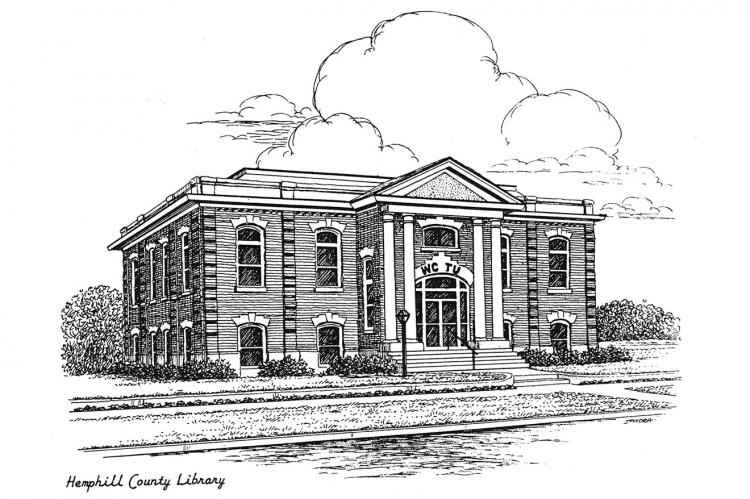
In 1972, the WCTU Library became the Hemphill County Library and was recognized as part of the Texas Public Library System. A year later, the building was remodeled and expanded, doubling the size of the existing space, adding a small meeting room, storage, and much-needed space to accommodate its growing collection of books.
A more extensive construction project was funded by Hemphill County from 2009 to 2011. The house that turkey built was structurally augmented, greatly expanded, and updated to accommodate our digital world, while still preserving the integrity of its past.
Today, it is the only locally-owned and -operated WCTU building in the nation.