
Finding a cure ... for coronavirus vaccine hesitancy
The new buzzwords in the local medical community are “vaccine hesitancy,” a term that assumes an even more urgent undertone as the delta variant spreads, and Texas’ coronavirus test positivity rate is reported to have exceeded 10 percent, this week, for the first time since February.
Only 31 percent of Hemphill County residents are fully vaccinated, according to the latest numbers from the Texas Department of State Health Services this week, although nearly 72 percent of residents 65 years and older are fully vaccinated. Vaccination numbers in most surrounding counties are lower, ranging from Ochiltree, with 28.1 percent of the population fully vaccinated, down to Roberts, where only about 22.7 percent of residents are fully immunized.
Hemphill County Hospital Administrator/CEO Christy Francis acknowledged last week that there is still work to be done in this community to reach a higher rate of vaccinations. She said her staff is tackling vaccine hesitancy head-on, and working hard to counter the misinformation about vaccinations that tends to spread through social media and by word-of-mouth.
Hemphill County Hospital is waging ”a vaccine confidence campaign,” Francis said, and she hopes to recruit the help of community leaders in encouraging more of the younger residents to get protected from COVID-19.
“We need it to be the people that the community wants to listen to,” she said. “We will get the doctors involved…because they are all for it. They were the first ones that took [the vaccine.]”
Health experts estimate that 75 percent to 90 percent of Texans would need to be vaccinated to reach herd immunity. This state is still far from reaching that threshold, reported the Texas Tribune this week, even when considering people who have some immunity from a previous COVID-19 case. “The CDC recommends people previously infected get vaccinated because scientists aren’t sure how long immunity lasts for them,” the Tribune noted.
Statewide, only about 42.8 percent of Texans have been fully vaccinated. Vaccines are not approved for children under 12, who make up about 17 percent of that population.
According to the Tribune, Texas’ coronavirus test positivity rate exceeded 10 percent last weekend—a level that was considered a red flag earlier in the pandemic. Daily confirmed new case totals are also rising, as are hospitalizations, although they are still below last winter’s peaks.
On Saturday, the Tribune reported the seven-day average for new confirmed cases in the state was 2,119. That’s nearly triple the average on the first day of July, when it was 757. The number of people hospitalized for the coronavirus was also climbing—from 1,591 on July 1 to 2,834 last Friday.
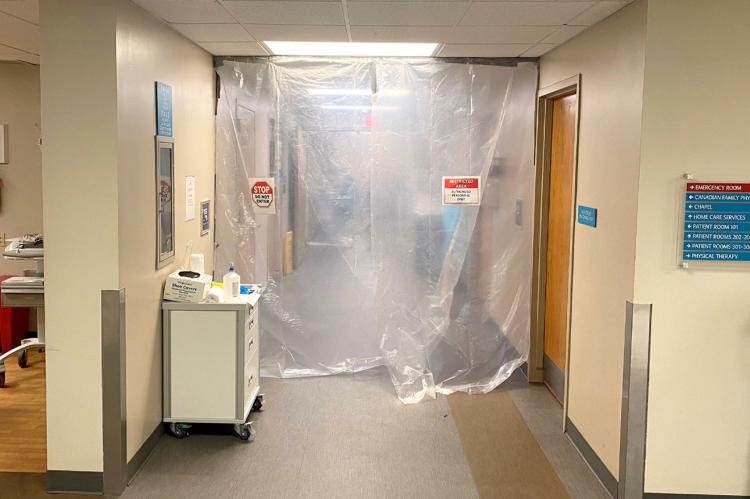
Francis’ greatest concern is that if more Hemphill County residents are not vaccinated, the virus will hit this community hard during the fall and winter, as it did in 2020. “Last year, when it got so bad everywhere else, we thought we were safe,” she said. “We were casual when we shouldn’t have been casual. Well, now we know.”
One significant difference today, though, is the availability of vaccines. Hemphill County Hospital District has vaccines, and is prepared to get them in arms.
On Monday, Hemphill County Hospital held a clinic to administer the Pfizer vaccine to young people ages 12 to 17. The hospital had received 54 of the vaccines, and hoped to use them all. “We have employees that are super excited and want their kids to be the first ones on the list,” she said, “because they understand how important it is.”
For Francis, it is a race against time. School classes will resume on Aug. 16, less than a month away. The first delta variant case in the United States was diagnosed in March. Today, it accounts for 83 percent of coronavirus cases in the United States, and is racing through the country. Several states in the South are reporting a large increase in COVID-19 cases, particularly in areas with low vaccination rates. And a state health officer in Mississippi, which reported more than 2,300 new COVID-19 cases over last weekend, is calling it the fourth wave.
Delta is more contagious than the other virus strains, and those who have not been fully-vaccinated against COVID-19 are the ones at greatest risk. Because it is so easily transmitted, the risk of hyperlocal outbreaks is of great concern to medical providers.
Being fully-vaccinated is the best protection against the Delta variant. Those who are not vaccinated—because they are at greatest risk—should follow CDC prevention guidelines by wearing a mask and social distancing. The best prevention, though, is to get vaccinated.
Francis hopes to hold another Moderna vaccine clinic here to use the 150 doses HCH has available already, and says she will work aggressively to disseminate accurate information about COVID-19 and the vaccines, in general, and the new delta variant, in particular.
But she has a simple message for those who ignore the warnings. “Those people need to walk through here, when it is like it was last December, and see what it’s like. It was…it was unbelievable.”
“We don’t want that to happen again this fall and winter.”