State Sen. Kel Seliger speaks bluntly in remote town hall
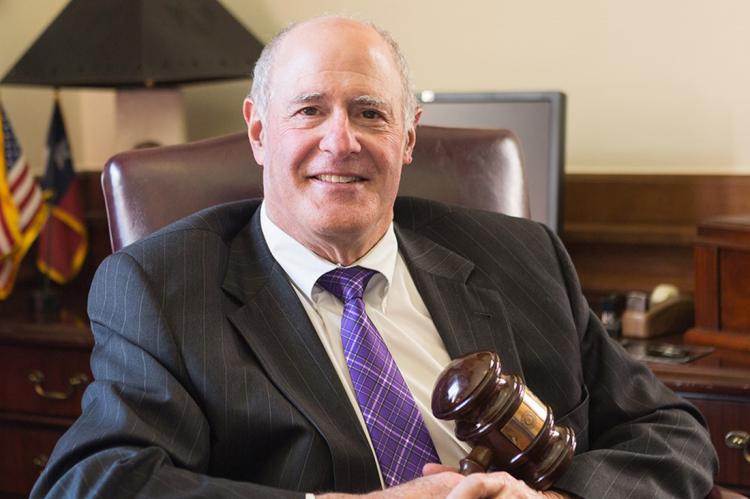
State Sen. Kel Seliger took some time out in the midst of an unusually lengthy session of Texas’ 87th Legislature to meet remotely with constituents from Hemphill, Lipscomb and Ochiltree counties last Tuesday, Sept. 28.
In a third special session now underway, Texas lawmakers are redrawing the political maps for the state’s congressional, legislative, and State Board of Education districts—a process which happens every 10 years after new census data is released. The ongoing session has tied most lawmakers to the state capital, resulting in either the cancellation of planned town hall meetings, or the transition to online forums.
Early this week, Seliger broke with his Republican colleagues to vote against the Senate redistricting plan, as he had announced last week he intended to do. The proposed plan would remove some Panhandle-area counties from SD 31, which Seliger represents, and add more West Texas counties in the Permian Basin to his district.
In Seliger’s Zoom meeting last week, he signaled his opposition to the plan, saying that it was insulting to the Texas Panhandle.
“I just want to see a redistricting scheme that does a good job for the District and its representation,” he said. “This one takes four counties out of the Panhandle and moves them into another district and takes this district almost to the Texas/Mexico border, about 400 miles long.”
“This map was done to try and give some sort of aid to one of the principles of the Texas Public Policy Foundation in Midland,” Seliger said. “That’s what I object to, because there is no organization in the state of Texas that is more opposed to local control and public education…So at this point, I am opposed to this map and will vote against it.”
The TPPF member Seliger referred to is Kevin Sparks, who in August, announced as a candidate for the District 31 seat in the Texas State Senate, and is a TPPF board member.
Sen. Seliger also bucked his Republican colleagues in voting against Senate Bill 47, legislation from Sen. Paul Bettencourt (R-Houston), that would require a full forensic audit of the 2020 general election results in Texas. Former President Trump called for the Texas audit a few weeks ago, and endorsed Sparks’ candidacy following Seliger’s vote against it.
Seliger was asked his opinion of the proposed audit during last Tuesday’s Zoom meeting. He responded with a question of his own.
“What for? What is that full forensic audit gonna tell us?” Seliger asked. “This is all coming from people like the Texas Public Policy Foundation and the Heritage Foundation.”
“I got news for people, including my fellow Republicans: Why do we need to audit? Do I think it’s particularly harmful? No, I don’t. Do I think it’s worth the money that will be spent? No, I don’t.”
The senator spoke scathingly of the months-long election audit—performed by an organization called Cyber Ninjas—in Arizona’s Maricopa County, which resulted in no change to the official outcome.
“What did they do?” Seliger said, “and this is really entertaining. They took these voting machines, and they took them into a private room, and they locked the door.”
“The law says that ballots, be they paper ballots or voting machines, must remain in the custody of the duly-elected or appointed election officials,” he continued. “When they take those machines out of custody, they break the chain of evidence, which means if they found out that Donald Trump got the 86,000 votes in Maricopa County that he needed, it wouldn’t have [held up in court] because there was no chain of evidence.”
“It cost the people of Arizona a million dollars,” Seliger said. “So we’re going to do it in four counties, and what we’re going to find is that the results are what we think they are.”
“So we’re going to have this audit in the state of Texas, and I’m giving you a little forecast: there’s going to be absolutely nothing wrong,” he concluded. “A million dollars, [for an] expensive comedy, in my view.”
Sen. Seliger also brought up another bill he opposed during the legislative session: House Bill 20, which he called “The Social Media Censorship Bill.” HB 20, which was signed into law last month, made it illegal for big social media companies to ban users based on their political viewpoints. Seliger said he had vigorously opposed the bill.
“Make no mistake,” he said. “We did this because Donald Trump got thrown off of Twitter. They have standards. He violated those and got thrown off.”
“This is a private business that has its standards and does what it wants to do as a private business,” he said. “If you send a letter to [The Canadian Record] and it does not get printed, is it censorship? You can argue, if you will, that it is a private business that can do what it wants to do. And I think that we—particularly myself as a Republican—should very much protect that.”
“Here is the problem,” Seliger said. “My party is becoming the party…of bigger government. We passed a bill—I registered a no vote on this—that says your city cannot regulate the number of chickens you have in your backyard…That sort of thing is the responsibility of your city council. If you don’t like it, get a new city council. If you don’t like the way schools are being run, get a new school board. Our system is not that complicated when it comes to basic things.”
Seliger spoke briefly on several other hotbutton issues, among them:
Critical Race Theory
“One subject that has gotten a lot of talk: critical race theory. I urge everybody to Google it and look at what it is. Whether one accepts the basic thesis itself, about the pervasiveness of racism, it must be taught. Slavery, discrimination, Jim Crow, poll taxes, the things that led up to the George Floyd murder. They must be taught. At one time, there was a prohibition against teachers teaching current events. Todays’ current events are history. The sooner we talk about them, the sooner we learn from them.”
Governor’s Order Against Mask Mandates
“A lot of superintendents are in defiance of the gubernatorial order. I don’t know that it was constitutional. I think we should trust our educators to [make those decisions]. They’re concerned about education. Legislators are concerned about politics. Politics never saved anyone’s life.”
Property Tax Reform
“The reaction I get, as you can imagine, is pretty interesting when I [say] that you don’t have to pay any property tax at all, not a nickel. Anybody who was running for school board, county commission, or for city hall, who said, ‘We are going to cut taxes by half,’ or ‘We’re going to wipe out property taxes,’ I happen to think that would be a very, very popular political stance. I think it would also—if somebody really meant to see it through—ruin law enforcement, and street improvements, and fire defense, and all those things that go into a city.
“People expect a lot from city government. And you can go to zero on it. But people also think a lot of city services. And I think there’s a little bit of hypocrisy there. I want to see somebody run on that platform and see what it does.”
Abortion
“I think that we passed some things that, in some ways, cannot be enforced. One of the things that I find troubling is that if someone does get an abortion, anybody from anywhere can go sue all the people involved in that termination, from the doctor to the person who gave the young lady a ride. And depending upon the outcome of that litigation, they will collect a $10,000 bounty from the state of Texas. I think we’re getting onto some really dangerous ground. They’re putting a bounty on Texans.”
Medicaid Expansion
“Medicaid has been expanding over some time. The problem with the expansion of Medicaid is for a lot of people, it was simply the expansion of Obamacare, which had a lot of problems. When it comes to providing healthcare for people, we’re going to do that, and we have to do it in a systematic fashion. We’re going to put more money into Medicaid in our supplementary budget, because the simple fact is, if these folks simply show up at the emergency room, federal law says we have to take care of them. So if we have to take care of them anyway, let’s do it in a systematic fashion.
Medicaid is going to be expanded in any case, because as the population of Texas grows, so is the population of those people requiring healthcare who cannot afford it.”
COVID
“I can't talk enough about how our healthcare system responded to COVID. It was great. The Department of Emergency Management did a wonderful job. At one point, they got 18,000 masks up to Dalhart in 24 hours because we had the problem…in a packing plant.
The best performing vaccination center in the United States was in the Texas Panhandle. If you got within two blocks of the vaccination center in Amarillo, you were getting a vaccination.
When it comes to voluntary [vaccination]. People's objections to vaccinations go pretty deep into their personal beliefs and things like that. And if you don't want to get a vaccination, don't get a vaccination.
But the way to reduce the chance of getting the infection is wearing a mask. Any responsible medical authority will tell you. If you remember months ago, the governor said it's up to county judges to determine if there will be mass mandates, [and he] put it on local elected officials.
If you don't like it, go to the polls, wearing your mask or not, [and] get a new county judge and county commissioners.”
College Education
“I like the emphasis on community colleges, because they do just such an essential job right now today. Walter Wendler, the president of West Texas A&M, is traveling around the Panhandle, to every county, to talk to young people and parents. And what he's telling them very often is, if you need to borrow money to come to West Texas, we’re saying we want you, but don't do it. First thing you need to do is go to your local community colleges, get your associate's degree, then come to West Texas.
Now you're getting a really good education for a fraction of the cost. And that's very, very important. His is a really good message, and one that I endorse.”
Permitless Carry of Firearms
“The majority of people in the area I represent overwhelmingly support permitless carry. I was really ambivalent early on, because the system that we had, with the permits we had, worked.
Of felonies that were prosecuted in which there were convictions, 0.4 percent of those were convictions of people who had the permit. It worked.
This thing polled overwhelmingly in the district I represent. And I was one of the people who was able to amend the bill that said that for some [convicted of] violations like domestic violence, and assault with injury, they're still restricted and people can't carry.
One has to reconcile a personal opinion with the opinions of the people that they represent.
Texas Secession
“One of the things that we had to deal with at this session, I realized that if these are people's firmly held convictions, they're not funny. Imagine sitting here and people calling and saying, ‘Do you think Texas ought to secede from the union?’ We tried that once. And it was not a notable success. And then, I don't know, 600,000 Americans died.
You know, imagine losing our air bases in Abilene and Corpus Christi and in Wichita Falls, and imagine losing all their federal money for highways and schools. And imagine losing all their money in Social Security and Medicare. Somebody said, ‘No, we're gonna get that. It's our money.’ No, once it gets to Washington, it's their money. And we would have to have a big income tax in the state of Texas. I think it's a miraculously bad idea.”